
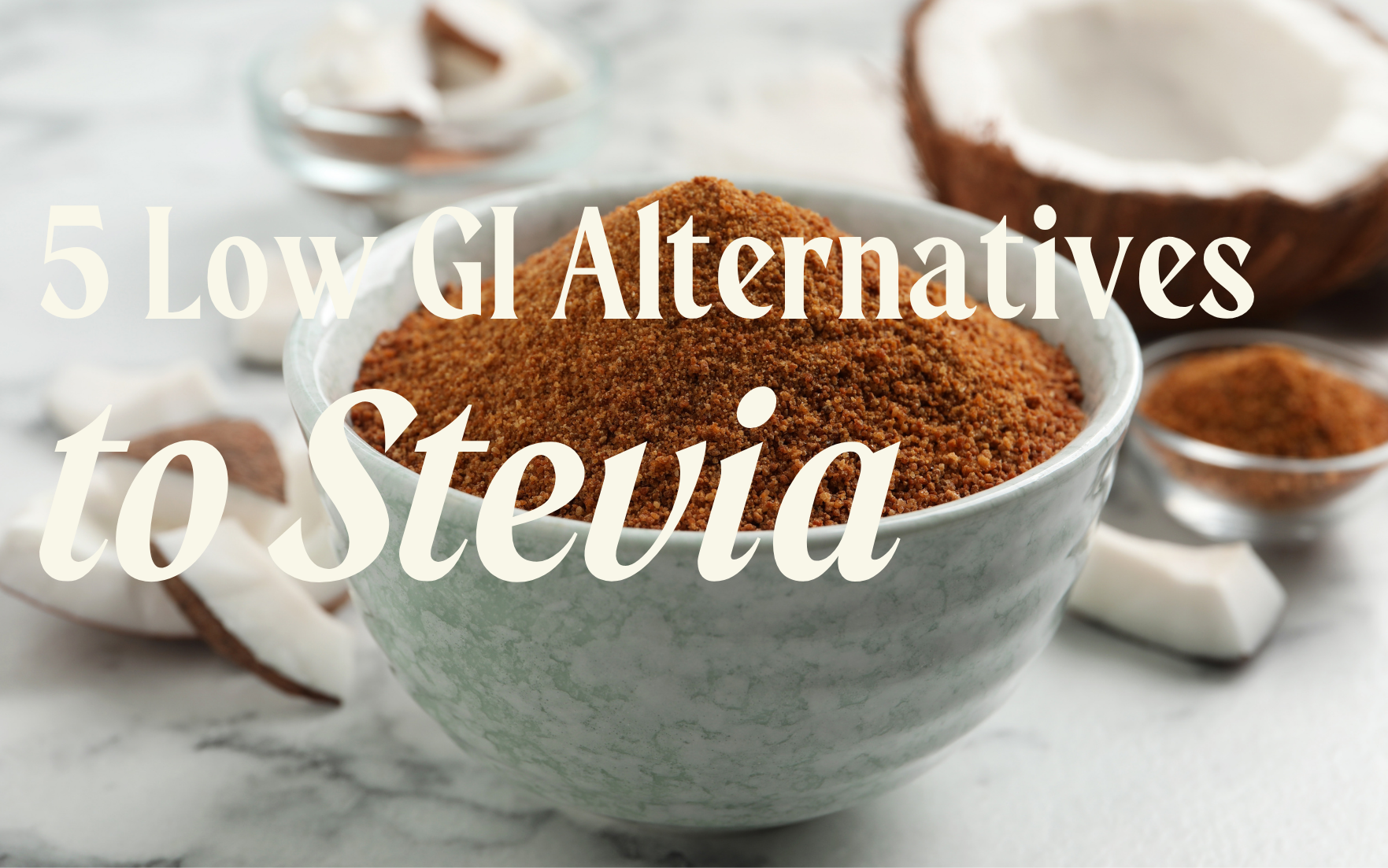
If you can't handle stevia, these are great alternatives.
First, I understand Stevia is often pushed as the gold standard for blood sugar management because it doesn't raise glucose at all. But the reality is, a lot of women find it doesn't sit well with them — digestively, or they just hate the aftertaste (true for me). And both are completely valid reasons to move on from it.
Raw honey and pure maple syrup are better choices than refined white sugar or high-fructose corn syrup. They're less processed, they contain trace minerals and antioxidants, and they have a lower glycemic index than table sugar. This matters.
What also matters is that they still raise blood sugar — they're just gentler about it.
Here's the good news: if you're using a small amount (think a teaspoon in your tea or a drizzle over yogurt), and you're pairing it with protein, fat, or fiber — the blood sugar impact is significantly reduced. This is the beauty of a whole GI approach vs. a low GI approach.
A few options I like for blood sugar management:
Raw honey — Has a GI around 50–58 depending on variety. Manuka and raw clover honeys tend to be on the lower end. The less processed, the better.
Pure maple syrup — GI around 54. Contains manganese and zinc. A small amount goes a long way because the flavor is more concentrated than sugar.
Coconut sugar — GI around 35. Retains some fiber (inulin) from the coconut palm, which slows absorption slightly. Good for baking swaps. I love this one for my coffee.
Monk fruit sweetener — Zero glycemic impact like stevia, but a completely different flavor profile that many women find much more neutral. Worth trying if stevia has been the issue.
Date paste — Higher in natural sugars but also comes with fiber, which helps buffer the glucose response. Better in recipes than as a standalone sweetener.
The sweetener question is one of those things that feels small but comes up constantly — and it's a good reminder that the whole picture matters more than any single ingredient swap. How you build your meals, when you eat, what you pair things with — all of it works together.
This kind of detail is exactly what we work through inside the Whole GI Protocol. The dietary piece isn't just "eat less sugar" — it's understanding how your body responds to food combinations, timing, and structure, so you're not fighting it or eliminating everything you enjoy. ❤️
If you've been curious about my Whole GI princinples, you can learn more [right here →]
Be well,
Jen
Certified Health Coach & Integrative Nutritionist Well + Easy
